Beyond Commodity: Unveiling the Terroir-Driven Flavors of Indonesian Coffee
For decades, Indonesian coffee was known primarily as an export commodity: vast volumes of green beans shipped to global ports to be roasted, blended, and transformed elsewhere. But over the past decade, this landscape has shifted dramatically. Indonesia is entering a new era, one in which coffee is no longer defined merely by volume, but valued for its identity, its stories, and the unmistakable character born from its origins.
This transformation did not happen overnight. Behind it stands a rising generation of young farmers, independent roasters, forward-thinking exporters, and coffee communities who increasingly recognize that Indonesia’s flavor diversity is something to be celebrated. From Aceh to Papua, every region holds its own terroir, a distinct interplay of soil, climate, altitude, varietal, and farming practices that creates flavor profiles as unique as the landscapes themselves.
Indonesia: A Nation of a Thousand Terroirs
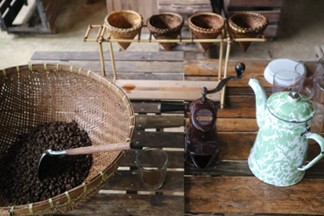
If France champions terroir in its wines, Indonesia has an even stronger claim to the concept in coffee. Geographically, the archipelago stretches more than 5,000 kilometers along the equator, a volcanic chain blessed with an extraordinary range of microclimates, even between regions separated by only a few valleys.
Sumatra sees rain nearly year-round, its fertile volcanic soil often veiled in mist. Nusa Tenggara leans toward the opposite extreme, dry, windswept, and marked by long summers. East Java is crowned by mountains reaching over 3,600 meters, while Papua is home to remote highland basins accessible only by small aircraft.
This diversity makes Indonesia’s coffee not just varied, but impossible to homogenize.
Sumatra: Forest-Heavy Aromas and Deep, Earthy Complexity
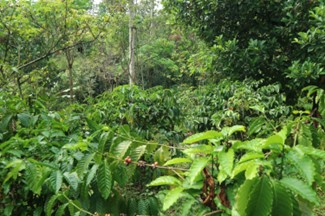
Sumatra is an icon, and for good reason. Coffees from Gayo, Mandailing, and Lintong are globally recognized for their heavy body, herbal aromatics, and lingering dark-chocolate finish. Their signature “wet earth” character comes not only from Sumatra’s moist volcanic soils, but also from its unique post-harvest method: giling basah or wet-hulling.
Born out of necessity in high-rainfall regions, wet-hulling removes the parchment layer while the beans still hold significant moisture. The result is a cup that is bold, low-acidity, and unmistakably Sumatran.
Today, a new wave of young producers in Gayo and Mandailing is experimenting with natural, honey, and anaerobic approaches, further expanding Sumatra’s already rich sensory landscape.
Java: Classic, Clean, and Gracefully Structured
Java’s coffee heritage stretches back to the Dutch colonial era, yet its modern profile has evolved into something far more refined. Historic estates in ljen, Dampit, and Gunung Halu now integrate contemporary processing methods while retaining their traditionally balanced character.
Javanese coffees are generally known for medium body, gentle acidity, and subtle notes of spice and nuts. In higher-elevation regions like Argopuro and Sindoro, floral aromatics and touches of tropical fruit begin to shine. In many villages, younger farmers are taking over post-harvest operations, producing micro-lots with far greater precision.
Bali Kintamani: Bright, Citrus-Forward, and Delicately Curated
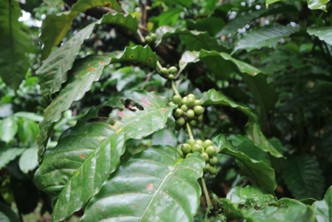
Kintamani has long been a gateway for drinkers seeking Indonesian coffee that is light, bright, and not necessarily earthy. The profile is citrusy, clean, and refreshing, shaped partly by drier conditions and partly by Bali’s subak system, an ancestral, community-regulated water-management tradition.
Bali also became one of Indonesia’s first regions to earn Geographical Indication (GI) certification, affirming that Kintamani’s flavor identity cannot be separated from its collective governance, agricultural ethos, and cultural heritage.
Sulawesi: Layered Sweetness and Elegant Complexity
Toraja and Enrekang are havens for flavor complexity. High altitudes (1,400-1,800 masl), granitic soils, and cool mountain air create coffees with refined acidity, gentle fruitiness, and long, caramel-like sweetness. Many European roasters liken Toraja coffee to “the Burgundy of Java”, a refined, nuanced red wine expressed through coffee.
Producers in Rantepao and Kalosi are now adopting natural and anaerobic methods, amplifying berry-forward, winey, and tropical notes that increasingly attract global attention.
Flores & Nusa Tenggara: Exotic, Spiced, and Floral
Flores, particularly Bajawa and Manggarai, has risen remarkably in prominence in the past five years. Its coffees offer a distinctive blend of floral aromatics, citrus brightness, and a juicy medium body. Dry volcanic soils and high elevations contribute to a clean cup with occasional herbal or spicy undertones.
Sumba and Timor present a different expression altogether: herbal notes, black-tea clarity, and soft chocolate, offering a refreshing alternative to Indonesia’s more robust profiles.
Terroir Isn’t Everything: The Craft of Farmers and the Art of Processing
Terroir may set the foundation, but the farmer’s hand defines the outcome. Across Indonesia, a new generation of producers is investing in:
- selective hand-picking of fully ripe cherries
- controlled fermentation
- slow, consistent drying
- small-lot traceability
- direct collaboration with roasters
These shifts are elevating Indonesian coffee from commodity grades to micro-lot specialty-redefining both quality and perception.
Beyond Commodity: The Future of Indonesian Coffee
Indonesia’s journey away from the “commodity coffee” label is far from finished, yet the foundations have never been stronger. As more farmers embrace quality over quantity and more local consumers appreciate the narratives behind every bean, Indonesian coffee is poised for a far more distinguished role on the global stage. Ultimately, Indonesian coffee is more than a beverage. It is a reflection of the archipelago’s diversity, every cup carrying the story of mountains, rain, sunlight, culture, and the hands that nurture it. And as we continue to move beyond commodity, we are not simply exploring flavors; we are honoring the identity of Indonesia itself.